Forget me not
Do we live to be remembered or do we remember to live?

My mother is petrified of dying alone. When I was traveling last month, she broke down and asked my partner: “what if something happens to me before he comes back?”. It’s a good time to mention that she has Alzheimer’s. But it would be unfair to put all the blame on the disease. She has a point. I am all she has.
My biggest worry about losing her, though, is not the actual prospect of losing her; it’s the stark possibility of nobody showing up at her funeral.
She is estranged from her siblings. She is separated from a husband who is partly responsible for her condition. She has no friends. Nobody visits her anymore. She does not recall many of the relatives she was once fond of. She has steadily retreated into the comforting embrace of oblivion within the four walls of her bedroom. If she knows nobody, maybe nobody can hurt her. If there is nobody left to expect from, it’s impossible to be disillusioned anymore.
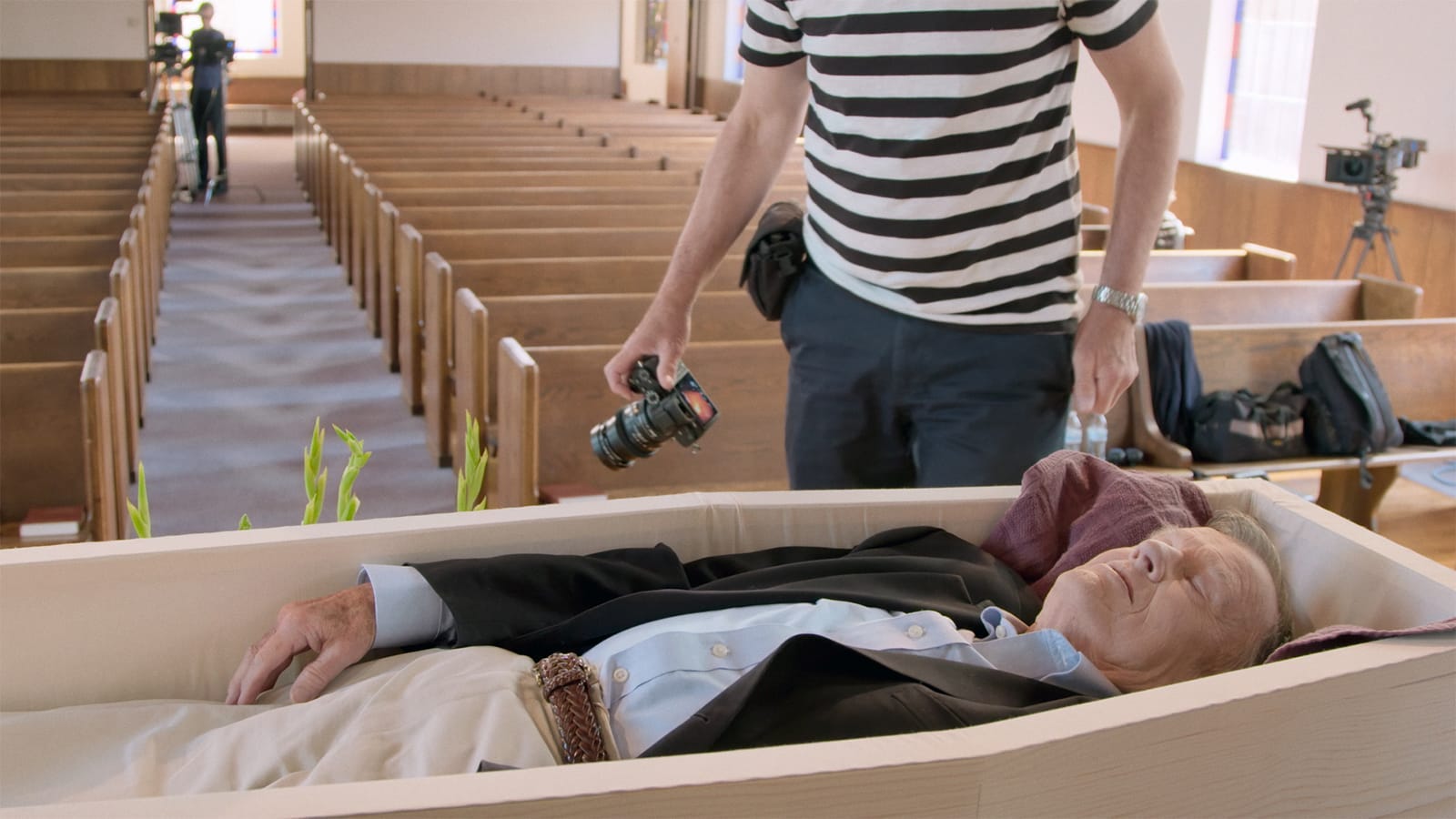
But the image of her empty funeral keeps me up at night. One of my favourite documentaries is Kirsten Johnson’s Dick Johnson Is Dead. The director simulates the death and funeral of her dementia-riddled dad so that he has the chance to say goodbye to everyone while he’s still present. The church is packed with old friends, former colleagues and clients, well-wishers, cousins…and cameras. As a psychiatrist, he repaired several lives. Johnson gets to see just how loved and celebrated her father will be. She looks proud, even as she’s filming.
It makes me jealous, of course. It’s not that my mom was unloved. She’s been disappearing for so long that perhaps people already see her as a memory. They’ve distanced themselves from the ghost of the woman she once was, almost as if they are racing to forget her before having to confront the indignity of being forgotten. It scares me that she might not be remembered by anyone else. Will it just be my partner and me at the crematorium? Will nobody say a prayer for her? Will the world stop for even a millisecond after she’s gone?
A couple of weeks ago, I saw many millennial X handles mourning the death of a virtual stranger. There were some lovely tributes. He was not a celebrity or anything. Just an ordinary man who collected friends and admirers along the way. I didn’t know him, but the heart felt heavy, like it usually does when we see popular social media accounts frozen in time. I could tell that he was opinionated, generous, funny and interesting; I started to know him in reverse. He left an impact on those who met him or exchanged messages with him, back when Twitter was a gentler space. One of them remarked he had such a winning personality that nobody needed to know his politics to like him. Just an all-around great guy, apparently.
The outpour of anecdotes reminded me of my best friend who died three years ago. I rarely heard him discuss politics, current affairs, his job or even personal problems. None of the topics that pass off as respect-building tools. I don’t even know what we spoke of on our travels together. But not once did our bond feel lesser. Not once did we have to talk about ‘important’ things to validate our perceptions of each other.
His wisdom was rooted in the way he listened. He probably knew a lot, but never flaunted it. He responded with patience. He always made information feel like a privilege. He had so many friends across the planet who attested to exactly this; they felt seen and heard with him. One meal or night out with the guy and you felt steadier, safer, lighter. The church was bursting at its seams during his funeral. They stood at the doors. It’s the best kind of fame — to be remembered just for being human. To be known for expanding the grace of anonymity.
The thing is, I’ve never been like that. Over time, I’ve come to terms with the tragedy of being myself: I’m a forgettable guy. People don’t fall over each other to hang out with me. I don’t really have much of a personality. I do not argue well. I have no tolerance for people who think they deserve respect by virtue of age or profession. I do not engage in heated conversations because I have imposter syndrome. I go quiet in big groups. I am not great at staying in touch with friends and maintaining long-term bonds. I use alcohol as a social lubricant. I avoid confrontation. I get anxious about throwaway comments. I brood a lot. I’d like to believe all of this is genetic, but that’s an excuse; the crutch of generational trauma is easier to lean on.
It’s true that I write because I fear interactions. I write to compensate for my lack of ‘aura’. I’ve started to realise that writing is not just my means of expression, it’s also my only mechanism to be remembered. It’s my only stamp on a shore whose waves keep erasing the footprints of relevance. I don’t have the gift of my late friend and the Twitter user. They could rely on their intrinsic humanity to make a mark; they didn’t even set out to be memorable. But I have to.
It’s why so many authors and public figures use their words as one-way communication — it creates an illusion of attachment with readers without having to nurture the physicality of relationships and social etiquette. It makes up for the loneliness we tend to pass off as solitude. Most of all, it lets us believe that our existence becomes a tiny ripple in the linearity of civilisation. We might mean something to someone. It helps me operate under the assumption that I cannot die alone. That I will not be lost to the past.
It’s not dissimilar to how we portray ourselves online — as people whose lives are significant enough to matter. I also like to tell myself that my ambition is not entirely selfish; that I’m doing it to make a difference. We are surrounded by movie and sports stars who are too reluctant to use their fame as a medium for awareness. Then I see authors like Arundhati Roy and Sally Rooney using their celebrity as a platform to speak out against genocides and authoritarian regimes. Sometimes I like to fantasise that it’s precisely why I work hard: to earn the mic that amplifies the right things. To have a say on a world beyond my own.
Lately, though, my motive is changing. It’s no longer about offsetting my dubious lack of interpersonal skills and my general allergy towards people. At some level, I feel like I’m trying to matter so that my mother matters. So that maybe she is remembered as the woman who raised a decent writer. So that perhaps those who read my pieces forgive my aloofness and feel a direct connection with her. So that her slow and cruel decline has archival value. So that my grief of losing her morphs into everyone’s grief of seeing her lose herself.
If my work means something, then my mom must automatically mean something too. If I’m able to reflect my glory onto her, perhaps we can forget the family that abandoned her. We can reject the patriarchal men who betrayed her trust. We can erase the seclusion and the spats. We can revise her mainstream obscurity into an arthouse story. And we can have a massive funeral in which she is loved and mourned by association. Strangers will show up in spirit. There will be no space left.
It’s the least I can imagine for a woman who is conceding the agency of memory so that I can reclaim it. When I was traveling last month, maybe she didn’t break down because she was paranoid about dying alone. She couldn’t bear the thought of me — her only and lonely son — not getting the chance to say goodbye. She couldn’t imagine me consumed by guilt and regret, fretting about a funeral that everybody will remember.
Dear God, Rahul! Who writes so beautifully...and I think it take so so much courage to be so raw, so honest, so human.
This is the only bit I wholeheartedly disagree with: "I’ve come to terms with the tragedy of being myself: I’m a forgettable guy. People don’t fall over each other to hang out with me. I don’t really have much of a personality."
You are anything but forgettable, my friend. And a mother you made you is nothing short of exceptional and worthy of cherishing. All the love to her.
Hi Rahul, As a mother who has gone through very similar life experiences, I can tell you that I would feel incredibly lucky to have a child who understands me and wants to honor me even after I’m gone. Your mom may not be able to tell you how lucky she is to have you, but I hope you know it.
You don’t have to become a famous writer for your mother to be remembered; she will be remembered through you. She is already becoming famous through your words, and I’m sure she is proud of you.