Loving strangers
Where I remember a woman who is losing all her leaves.

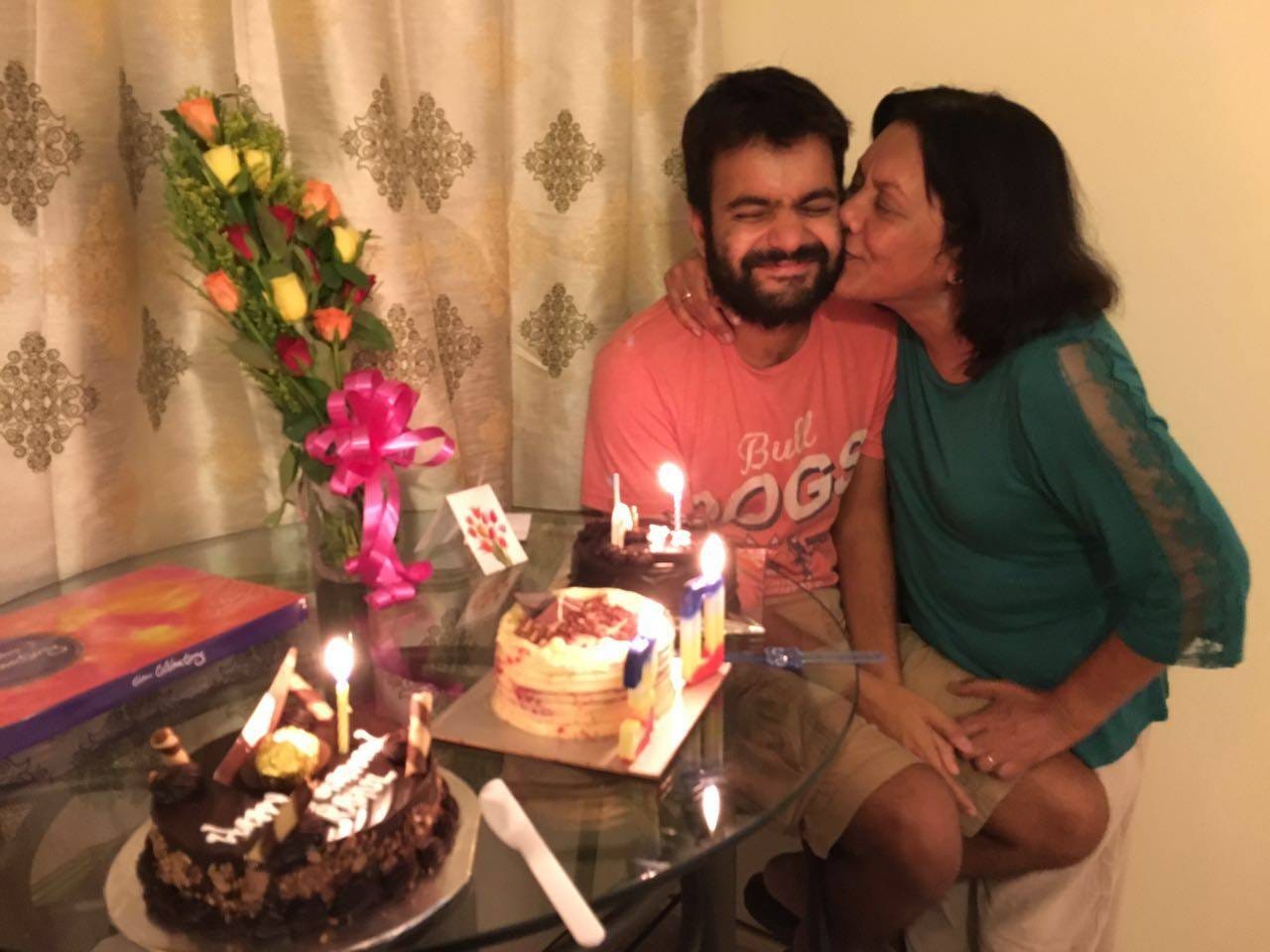
Every morning, I see a different stranger. Someone’s anxious. Someone’s confused. Someone’s complaining about the number of clothes in the washing machine. Someone’s triggered by a notification on the phone. Someone snaps at the househelp. Someone keeps knocking on my door to ask about grocery lists. Someone’s in bits at the thought of what to cook for lunch. Someone gets cranky when I give a curt reply. Someone gets stressed at the prospect of visitors. Someone frets that they don’t have enough money in their bank account. It’s been ages since I finished my first coffee without tending to multiple emotions. Or a few emotions multiple times.
Most of these strangers vaguely resemble my mother. Some of them look like her; others sound like imposters of her. Before this paragraph wades deeper into oedipal territory, the context is that my 69-year-old mom has Alzheimer’s. She was diagnosed a year ago, but the deterioration is palpable now. Every morning, I worry about which version of her might emerge. Every morning, she’s a stranger I’m supposed to love. It’s not that she’s forgetting names and places and conversations and numbers. It’s more that she’s forgetting how to be human. How to feel. How to react. How to be pleasant and secure. How to talk to people normally. How to be happy. How to listen. How to not get upset at the tiniest of disruptions.
I’m usually the one who upsets her. As a son she’s doted on for more than half her life, I struggle to stay patient with her fading mannerisms. I find it frustrating to notice that she’s devolving into a child; I often catch myself speaking to her in a strict tone — like a disapproving parent — to ensure that she understands every word. It’s unnerving when she visibly seeks my validation (“See, I cleaned the sofa”), and sheds tears at the drop of her hat when I brush her off. It’s disorienting to hear her fixate on insignificant details of our exchanges and sulk with a nobody-loves-me huff. The circularity of life has never felt so literal.
But the truth is that I’m actually frustrated with myself for treating her like it’s her fault. I get annoyed for making it about myself and not about the person who goes ashen-faced every time she remembers that she can’t remember. I feel guilty for getting embarrassed about her in social situations; she senses this and stays in her bedroom when guests come over. I feel sorry for getting provoked by her slurred voice as if she’s still drinking; she quit the day she got diagnosed, and yet I’m reminded of all those nights of boozing and self-pity. I feel small for lecturing her about her smoking and threatening rehab if she carries on despite the doctor’s orders. I feel selfish for expecting her to still be my mother. The anticipatory grief of losing a parent has slowly morphed into the moody heartache of combing through the rubble of parenthood. The more I interact with her, the harder I miss her. The harder I miss her, the more I grieve the loss of her agency to be alive.
We often wish we had the chance to say goodbye to those who depart abruptly. But what about those who depart one day at a time? What about those who have left without fully leaving? It’s like rehearsing for their absence in slow-motion: their lives shrinking to the point where the bed becomes an open casket. So many lasts have already happened without me realising it. Nobody told me I’d never see her laugh at a certain pitch again. Nobody told her she would never see me relaxed again. Nobody told me that Rocky Aur Rani Kii Prem Kahaani would be the final film we watched together in a cinema hall. Nobody told her that she would be afraid to leave the house again. Nobody told me that we would never ‘travel’ together again after an emergency trip to hospitalise my sick father.
Nobody told her that she would never feel like walking on a beach again. Nobody told me that she would stop surprising me with chocolates from the market again. Nobody told her that she would isolate herself and prefer watching the world from her window. Nobody told me that she would never sound confident again. Nobody told us that we would never be able to communicate again beyond queries about meals and bills and chores. If I had known that those were our lasts as they unfolded, I’d have done better to immortalise them. I’d have preserved a few mental souvenirs. Who am I kidding, though? I hate goodbyes, so maybe I consciously avoided freezing those moments in the hope that they might occur again. Perhaps she will wake up some morning and be a familiar stranger: wanting to step out for a dosa breakfast, or in the mood to explore Juhu and identify celebrity houses.
There are days when I don’t blame her. Or myself. There are days when my exasperation is shamed into empathy. My attention then turns towards the people in her life who have chiseled away at her heart with blunt scalpels: all those who have broken her under the guise of shaping her. I’ve villainised each one of them in my head. The greedy brother who ceased contact because she kept probing about her share of the family inheritance. The wayward sibling who calls to say he’s dying to emotionally blackmail her into sending him money. The tight-fisted older sister who pretends to care but can’t think beyond securing her own South Delhi-coded future. The cocky friend who disappears and drops in on their own terms, winning over my mother with a flashy gift. The acquaintances who fell out of touch after discovering that she left her marriage. The well-wishers who promised the universe to her and never delivered.
Ironically, the very disease spawned by years of accumulated trauma is the disease that insulates her from that trauma today. She does feel wronged, but she often forgets why. She does look defeated, but her mind refuses to delve deeper. The cognitive dysfunction is almost a shield that protects her from a crippling persecution complex. Sometimes I look at her and rage about the injustice of how those responsible have suffered no consequences. They’re all going about their existence without an ounce of remorse. They’re all peaceful and prosperous. And there’s nothing we can do about it. I feel like a victim on her behalf, the science of it all be damned. Eventually, I circle back to the character whose complicity in her decline — she is stranded at a stage between invisibility and anonymity — is absolute. The one character who is neither peaceful nor prosperous. The husband. My father. The former companion who has refused to legitimize their separation after a decade apart. The ex-partner who can give my mom an anxiety attack with a harmless phone call.
But it’s complicated. When I was younger and less informed, or more in denial, I used to blame my mother for his alcoholism. I felt bad for a “flawed man” who was too talented for a world that thrived on mediocrity and anti-intellectualism. At least that was the narrative I chose to believe; blame it on all those Bollywood masculinity dramas. He was the perfect victim. It would always hurt to imagine one parent relegated to the debris of memory — ageing, abandoned, left to fend for himself — while the other could live with me. So I visited him as much as possible, almost willing myself to sympathise with his wasted life. Whenever I felt distant and resentful towards him, I’d hop onto a bus and go see him in person. And I’d soften, watching him amble around the flat like a belated bachelor. It’s like seeing a dreaded gangster grow old and frail and meaningless (think Robert de Niro in The Irishman), humanised by the linearity of time and tide. I’ve made two such trips since the beginning of this year alone. Spending a few days in my childhood home with ghosts of our history. Reliving the past and fixing the future.
But something has changed since my mother’s diagnosis. I’m no longer there to care for him or do my duty. It’s rarely about checking in on him. Nostalgia and compassion are crutches for something darker. I find myself there as an estranged son turning every visit into an act of revenge. A quest for justice. I’ve come to realise that watching him fade is a source of perverse pleasure. It’s difficult to admit that the pathetic sight of him insisting that he’s healthy — when he’s clearly not; when he has the worst eating habits, smokes like a chimney, and looks like a hobo after his long naps and coughing fits — gives me a sense of catharsis. It’s like I go all the way to see him pay the price for failing as a husband. I go all the way to watch the live consequences of damaging my mother; this is atonement for his sins. The house is barely inhabitable, it has the atmosphere of a gas chamber, the food is not hygienic, and he walks like a baby who is learning how to walk. It disturbs me that I enjoy his plight of speaking with dentures, lisping and plowing through sentences like someone who refuses to heed his own decline.
Instead of sorting things out and improving his situation, I just sit passively and observe. I watch him pretend to be fine and lie about his reports and job applications. I try not to scoff at his totally misplaced arrogance. I listen to him speak about being positive when I mention her Alzheimer’s. I bait him into fights when he asks for money because it gives me a sense of control over his fate — the same control he abused with my mom. I remind myself that he nearly emptied her bank account last year, by forcing her to “return” a sum he once paid for her surgery. She’s been a homemaker all her life, so even by the bleak standards of patriarchal liberals like my dad, it felt like a vindictive move. A desperate one. Unfair doesn’t even begin to cut it. There’s not a day my mother doesn’t recall the money she returned, and how it’s left her with nothing. She misquotes the number every time she mentions it, too.
My spite is inexplicable, I know. I’m not the greatest son. My love is rephrased as the language of karma. But my father is the most accessible and tangible entity to blame. I don’t care much for my aunt and her heart problems, or my uncle and his failing liver. I don’t care much for my urges to see them fall. I do care for my dad enough to be cruel about him. I’m not proud of the way I feel, but I’d like to believe that perhaps my visits are more than an excuse to taste his defeat. Perhaps the ‘revenge’ will become a front to give him some company in his final years. Perhaps the rancor will become a ruse to ensure he doesn’t die alone. Who knows? As of now, however, I always come back to Mumbai like a triumphant soldier relaying victory to a sick queen. She doesn’t like to hear of him, but she inquires about his health; she wonders if he has any resources left to survive.
It’s magnanimity as much as muscle memory. She remembers his issues without dismissing my relationship with him. Funnily, it’s one of the few times my mother sounds coherent. It’s one of the rare instances she and I have an adult conversation without succumbing to sensory excesses. She perceives my conflicted attachment to him and resists criticism; speaking about him makes her nervous, but she does it for me. The grace she shows — towards the man who lifted us up to let us down — is what briefly connects us. It’s the kind of grace someone I know can learn to embrace. Someone who wakes up every morning and sees a new stranger. Someone who wonders how to love these strangers without reducing them to a tragedy. Someone who knows he needs to process the truth of these strangers before fully recognising them. Someone who will never be a stranger to a mother who is destined to forget.
How brokenly and brilliantly you write, Rahul. Though I logically know that I must look at Mum and Dad as humans with flaws and diminishing abilities...it's still hard on me when they even momentarily stop being my caregivers. Those moments are almost immediately followed by guilt and a sense of "being a bad daughter". It gives me the ick. But feeling this ick doesn't stop me from lashing out...over and over. again. The cycle continues. So does the ick. We all feel it. But we rarely share it. There's honesty what you write. But there's also skill and craft. More power to you. Here's to loving strangers and finding solace in words and sentences.
“We often wish we had the chance to say goodbye to those who depart abruptly. But what about those who depart one day at a time? What about those who have left without fully leaving? It’s like rehearsing for their absence in slow-motion: their lives shrinking to the point where the bed becomes an open casket. So many lasts have already happened without me realising it.” Oooof these words. The grief and guilt and dissociation and self-loathing and pride and empathy and love in this entire article. So well written, big hugs. As someone caring for two elders with dementia, I feel you and support you in the trenches.