Pocket change
I've been allergic to change all my life. But my stillness has always been in motion.

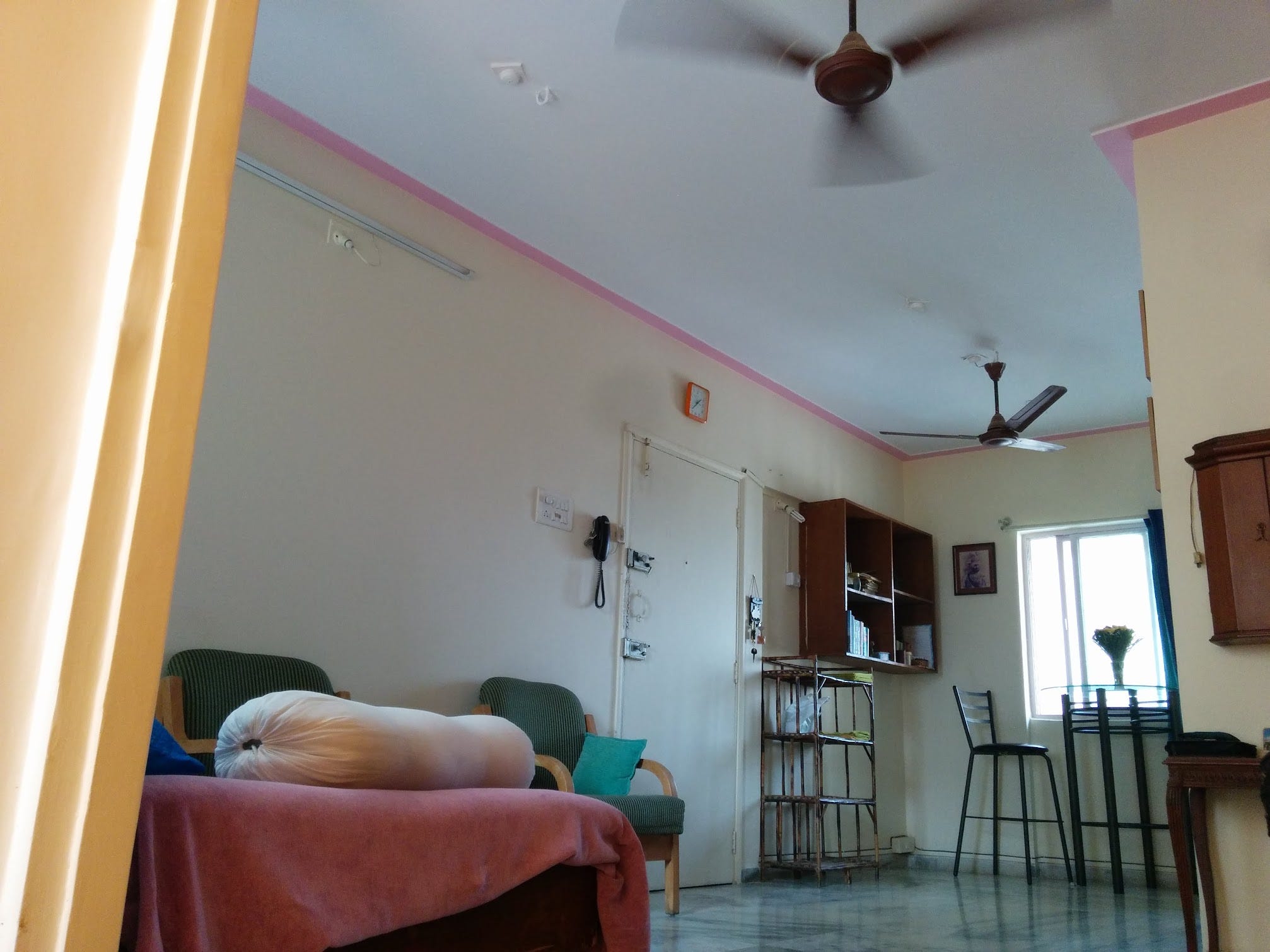
In 2016, I moved into a new apartment. Every evening, I’d sit by the window overlooking the society garden. I was curious about the residents. With my cup of coffee, I watched and envied their familiarity with the surroundings. One family caught my eye: a 50-something Maharashtrian couple, their adult son and daughter, the son’s girlfriend who visited on Sundays, and the family labrador retriever.
On weekends, they played catch with a tennis ball. On weekdays, they just strolled around. Weeks turned into months. The daughter left home to study abroad. The son’s girlfriend became his wife. They moved into the flat below his parents. Months became years. The labrador got old and sick. The daughter started her own family. The son’s hairline receded. The young couple’s fights got louder. Years became more years. The wife got pregnant. A baby was born. The dog died. The baby started walking and talking. The grandparents missed the dog. They adopted the society indie to fill the void.
It’s 2026 and I still watch them from my window. I avoid sharing the elevator with them so that they remain a motion poster. For me, they are the most tangible reminder that time is passing; that the cycle of life is afoot. Because, personally, I’m an agent of inertia.
I stay in the same rented apartment. I’m unmarried. My mother lives with me. I share the room with my partner. I swim in the same pool down the road. I don’t own a car. I go to the same bars and restaurants. I’ve spent my thirties in a suspended state of stillness and sameness. On a recent flight I watched Here, the Ron Howard movie in which multiple generations of an American family are seen from the perspective of the house they inhabit. I feel a lot like that house – a body of narrative concrete around which humans keep living, loving, growing and dying. The residents here must wonder if I’m a social experiment. Every time they see me, they look like sailors steering their ships past my fading beacon. To them, I’m the most tangible threat to the linearity of time.
I’ve convinced myself that I’m a creature of habit. I swear by a sense of routine; I look for safe spaces and comfort zones. But the truth is far more dramatic: I have metathesiophobia. Here’s where I pretend like I knew the word for “fear of change” all along.
Imagine that, though. Change is the only constant in life, so fear has been the only constant in mine. I’ve never been able to process the inevitability of change. It’s why I’ve always held onto sinking relationships. I’ve let romantic and platonic bonds drift without a sail rather than entertain the prospect of a different boat. It’s why I’ve hated the monsoons and the month of July; the season signified a new school year, a larger classroom of faces and teachers, a whole new set of exams and lessons, just so much change.
It’s why my family’s big move to Mumbai in 2002 inextricably altered my personality. I spoke so little in that first year that I almost unlearned the English language. I forgot entire words and worlds. It’s why my loyalty to people, places and jobs is a default position instead of a genuine one. I’m loyal because I’m afraid of the unknown. I don’t want to know what comes next.
I wonder where this fear stems from. It’s that classic narrative trope: the childhood flashback where the camera reveals a scared little boy hiding under his sheet while his parents yell at each other every night. Dysfunctional family-hood is a cliche, but every dysfunctionality bleeds into the future at its own pace. My mother and father had a volatile marriage. There was alcohol, infidelity, joy, violence. I got back from school every evening half-expecting one of them to stop existing. I’d often return to an amateur performance, where both of them would pretend as if he hadn’t lost his job again.
Basically, I was in a relentless state of disquiet: Would he be gone? Would she be there? Will my uncle be around to distract me? Would I be spending the weekend with my grandparents again? That’s my supervillain-origin story of change. My sense of belonging – and togetherness – was perpetually under siege. I had separation anxiety, abandonment anxiety, homesickness (even when I was at home), and all those undiagnosed conditions kids from broken homes tend to have.
Consequently, the older I got, the harder I strived to control life’s grand variables. I wanted everything to be still for a change. I was driven by a need to stay: steady, calm, rooted, stagnant even. Walk the same paths. Aspire within the same parameters. Hang out with the same friends. Write for the same editors. Love in the same breath. Any sudden deviation unsettled me.
It didn’t matter that this came at the cost of mainstream evolution. So the moment I moved into this flat, I did everything in my power to remain that way. I became the walls, the windows, the cracks and the pillars. Families and dogs and trees grew around me. I was finally the master of my own (im)mobility. But not in a rules-religion-tradition way. I was the only victim of my regressive mindset.
The only change I enjoyed, ironically, was the traveling I did. I loved seeing the world of course, but it was also because these exotic escapes made me miss the monotony of home. The wider I wandered, the more I valued the certainty of going back. I got addicted to these transient bouts of longing, a fuel that kept my relationship with change toxic and alive. An old college friend became a companion on these travels. From the outside at least, we were very similar. He spoke less and only when it mattered. He, too, was unmarried and lived on his own terms. He loved sports. He liked his beers and burgers. He liked solitude, and swore by morning and evening rituals. His first job remained his only job. So when we met in different countries, I considered us kindred souls: the ‘rebels’ who resisted the norm.
But the more I romanticised us, the fatter my denial became. It didn’t take me long to conclude that he was in fact a student of change. He spoke less, but his words changed people. He was unmarried, but he chose to build and sustain long-term bonds with friends around the globe; every month in his contact felt like a change, an upgrade, of our emotional intelligence. He loved sports, but stayed open to his changing equation with favourite teams and athletes. He liked his sins and solitude, but stayed flexible about the changes in his body and mind. He worked at the same company forever, but kept growing and taking up new roles to challenge himself; he became famous for his professionalism and talent, not least because he kept seeking change within the uniformity of his field.
While I went steady with Mumbai, he managed to make a new life in cities as diverse as Chennai, Chicago and Dubai. Most of all, he adored his family, but remained committed to the calibration of this love. He prioritized his sisters and parents above all, yet rarely made others feel like he was out of reach. The wider he wandered, the more he valued the uncertainty of new places.
Much to my shock, he looked at our trips through the lens of “What if I were to live here?”. His stillness was an expression of endless micro-motions. His sameness was defined by the desire to adapt, mature and restart: to cram multiple lifetimes into one. Change, in his eyes, was such an intrinsic act that it needn’t be visible at all. All we noticed was his serene exterior, but his legs furiously churned underwater. My ‘Why?’ was often his ‘Why not?’. Not a day passed without me wondering how he cared for so many people despite being an introvert. Everyone liked being around him. Even his silence sounded like a conversation of thoughtful pauses.
At times, I almost felt betrayed. He wasn’t the rebel who resisted change; he was the rebel who reformed the language of change. But every visit to and from him made me realise that I was perhaps not as static as I thought. Marriage was never the currency of the companionship I seeked. On the contrary, every partner expanded my heart and my identity. For someone who pursued financial stability, I chose the risk of freelancing, which in turn allowed me to spread my faith and income across employers. Instead of subscribing to conventional notions of moving ‘forward’ and getting promoted, I simply changed: by becoming better at what I did. I go to the same swimming pool, bars and restaurants to offset the dynamic nature of a work-from-home job shaped by movie-screening schedules.
My mother lives with me because she had the courage to change; she walked out of a marriage, defying societal standards of age and security. I spent my thirties in an elastic state of stillness. When the residents here see me, perhaps I’m an object in their rear-view mirrors: always closer than I appear, but in a different lane. To them, I’m probably an ode to the non-linearity of living.
In other words, my friend changed my life without me detecting it. And he continues to do so, even in death. I didn’t struggle as much during the Covid-19 lockdowns because that’s when he was diagnosed with leukemia. I was too busy confronting the horrors of a life without him to feel the physical isolation of a pandemic. When he passed away last year, the numbness that followed made me immune to change.
Suddenly, I was unfazed. The perceived fear of anything paled in comparison to the actual fear of losing my best friend. Strangely, it’s almost like his final act of living – and leaving – prepared me for the mortal fluctuations of life. I took the trip we were supposed to take together. The loneliness of having one beer at a table for two fortified me for some brutal changes ahead.
I found it easier to let go of selfish friends and acquaintances. “What if I die alone?” morphed into “What if I die unhappy?”. My father fell ill, but the sight of him on the ventilator didn’t cripple me. The looming change of his absence didn’t affect me. Previously, I’d have fretted about my future – or the reality of anticipatory grief turning into real grief – without him. But all I could feel during his hospital stint was pain and empathy for him. I could only think of how tragic it would be for a man of his intellect and ego to go in such an inglorious manner. He survived. And I wasn’t haunted by any of it.
Another massive change emerged soon after. The publication that carried my byline for 8 years went out of business in 2024. I didn’t nurture the attachment of a full-time staffer, but the space had been my unwavering companion since I moved into this apartment. Nobody had more words on the website than I did. The people who worked there – sometimes anonymous names and voices – became my extended family. I couldn’t remember a time without them. There was a permanence about us. And just like that, it was gone.
Yet, the last thing on my mind was the loss of opportunity or income. The only thing this change prompted is the melancholy of departure, not dread for the void it left behind. For someone whose profession is under attack week after week, I’ve been disgustingly composed. Some might even call it denial. I should be all over the place, panicking and spiralling with every new propaganda movie, but I can’t. I should be losing my mind about having to move out of this rented nest, with most of the area under redevelopment. If anything, I’m inquisitive about what lies beyond. The cynicism has evolved into skepticism.
In a way, I’ve run out of fear. I’m no longer paranoid about the bumpy highway ahead. Maybe my aversion to change has been cured. Or maybe I’m just too wounded to bleed anymore. My friend was always more of a home - an anti-structure of shifting meaning – than a concrete house. I feel like that home today. I feel like the glass in the windows, the cement in the walls, and the bricks in the pillars. I feel like the humans it shelters and the shelter it humanises. Families and jobs will begin and end, but I will be. After all, even repetition – the sun rising, the night falling, the planet rotating – is a paean to the stamina of change.
[This is an updated version of an old blogpost; ironically, nothing has changed since]
This blew me away.
It made me evaluate my relationship with change and how I seek it. I relish it - the newness of starting over in a city, at a new job, making new friends. And what that means for me when one thing I’ve been trying to do the past couple of years is put down my roots. You’ve left me with much to think about.
Thank you for this.
The timing of this crossing my timeline is unreal. Questioning one's ability to deal with change, uncertainty is monstrous. This piece, Rahul, surely planted a reflective seed.
Thank you for this.